
Mental Health Neurodiversity Isn’t What You Were Told
— 7 min read
Nearly 70% of adults with autism spectrum disorder (ASD) report clinically significant depression, roughly three times the rate seen in the general population. This high prevalence challenges the notion that neurodiversity is solely about cognitive style and signals a deeper mental-health dimension.
Medical Disclaimer: This article is for informational purposes only and does not constitute medical advice. Always consult a qualified healthcare professional before making health decisions.
Mental Health Neurodiversity Across ASD Populations
When I first began covering autism research, I expected the conversation to center on sensory sensitivities and social communication. Over time, however, I have seen the inclusion of neurodiversity in mental-health frameworks force a re-examination of support plans. Traditional interventions often address observable behaviors - like avoiding eye contact or difficulty with change - while overlooking the internal emotional distress that many autistic adults experience. By weaving neurodiversity into mental-health models, clinicians can design accommodations that respect both behavioral traits and the hidden burden of anxiety or depression.
According to the overdiagnosis debate in mental health, the surge in depression diagnoses among autistic individuals reflects not only increased awareness but also systemic gaps in early detection. Employers who embrace neurodiversity report that flexible workspaces, clear communication protocols, and options for sensory breaks reduce burnout, yet they still struggle to provide resources for mood disorders. I have spoken with neurodivergent employees who say that simply labeling their experience as “autism” does not capture the daily battle with hopelessness that can follow social rejection or sensory overload.
In practice, a dual-track support plan might pair a sensory-friendly environment with regular mental-health check-ins, perhaps via telehealth platforms that allow visual communication aids. The goal is to move beyond a one-size-fits-all approach and acknowledge that for many autistic people, the line between neuro-cognitive differences and emotional wellbeing is fluid. By integrating these perspectives, organizations can reduce the risk of untreated depression and improve overall quality of life.
Key Takeaways
- Neurodiversity frameworks now include mental-health dimensions.
- Depression rates in ASD are roughly three times higher than in the general population.
- Accommodations must address both sensory needs and emotional distress.
- Early detection and regular check-ins improve outcomes for autistic adults.
Neurodivergent and Mental Health in Common Developmental Disorders
My reporting on ADHD and Tourette syndrome has repeatedly uncovered a pattern: the prevalence of depression in these groups rivals that of autism, contradicting the stereotype that they are merely issues of hyperactivity or motor tics. When I interviewed a panel of clinicians working in a pediatric neurodevelopment clinic, they emphasized that mood disorders often emerge during the adolescent transition, a period already fraught with identity formation and social pressure.
Data from recent surveillance reports illustrate this convergence. For example, adolescents with ADHD exhibit depression rates that are nearly double those of neurotypical peers, while individuals with Tourette syndrome face comparable levels of anxiety and depressive symptoms. Below is a concise comparison of the three conditions based on the latest epidemiological studies:
| Condition | Depression Prevalence | Typical Onset Age | Key Contributing Factors |
|---|---|---|---|
| ASD | ~68% | Late adolescence to early adulthood | Social isolation, sensory overload |
| ADHD | ~40% | Adolescence | Impulsivity, academic stress |
| Tourette Syndrome | ~35% | Adolescence | Stigma, comorbid OCD |
These figures, while approximate, underline a shared vulnerability across neurodevelopmental diagnoses. I have observed that schools that adopt a unified mental-health strategy - offering counseling, peer-support groups, and teacher training on neurodiversity - see lower dropout rates and improved emotional outcomes. Yet many institutions still compartmentalize services, treating ADHD as a behavioral issue and Tourette as a motor condition, leaving depression unaddressed.
To break this cycle, professionals advocate for a trans-diagnostic approach that screens for mood disorders whenever a neurodevelopmental condition is diagnosed. By normalizing mental-health evaluations as part of routine care, we can catch depressive symptoms before they spiral into chronic illness.
Neurodiversity and Mental Health Statistics Unveil Hidden Burden
When I reviewed the latest public-health surveillance reports, I was struck by the magnitude of the hidden burden. Across the United States, depression diagnoses among neurodivergent youth have tripled compared with neurotypical peers over the past decade. This surge has placed unprecedented pressure on school counselors, community health centers, and family support networks.
One striking illustration comes from a nationwide school-based mental-health survey that reported 22% of autistic students and 18% of students with ADHD met criteria for major depressive disorder, versus only 7% of their neurotypical classmates. According to the Mental Health Awareness Month brief, these disparities persist despite growing awareness campaigns, suggesting systemic gaps in early identification and culturally competent care.
In my conversations with parents, the narrative often centers on the exhausting “diagnostic odyssey” - a long series of assessments that focus on academic accommodations but rarely ask about mood. Many families report that once a formal ASD or ADHD diagnosis is secured, mental-health referrals become a low priority, despite clinicians warning that co-occurring depression can exacerbate core symptoms.
Addressing this hidden burden requires a multi-layered response. Schools need integrated care teams that include psychologists trained in neurodiversity, while community health providers must adapt intake forms to capture neurodevelopmental history. Policymakers, too, should allocate funding for cross-disciplinary training programs that bridge the gap between special-education services and mental-health treatment.
"The rising prevalence of depression among neurodivergent youth is a public-health emergency that demands coordinated action across education, health, and social services," says a spokesperson from the National Alliance on Mental Illness.
ASD Depression Prevalence: The Rare Reality
Meta-analyses of clinical studies consistently reveal a startling 68% prevalence of major depressive episodes in adults with ASD, far surpassing the 17% rate observed in the general adult population. When I examined a systematic review of higher-education-based interventions for neurodivergent students, the authors highlighted that depressive symptoms often intensify during the transition to college, a period marked by heightened social demands and reduced structured support.
Researchers attribute this disparity to several interlocking mechanisms. First, social isolation - exacerbated by difficulties in reading non-verbal cues - creates a fertile ground for rumination. Second, sensory sensitivities can lead to chronic stress, which, over time, dysregulates the hypothalamic-pituitary-adrenal axis, a biological pathway linked to mood disorders. Third, the stigma surrounding both autism and mental illness can discourage help-seeking, leaving many individuals to cope alone.
In practice, I have observed that when universities implement neurodiversity-aware counseling services - such as allowing written communication with therapists and providing quiet therapy rooms - students report reduced depressive symptomatology. Yet, many institutions lack the resources or training to offer such accommodations, reinforcing the cycle of unmet need.
To move beyond the “rare reality” narrative, clinicians are urged to adopt routine depression screening tools that are validated for autistic populations, such as the Beck Depression Inventory-II adapted for neurodivergent communication styles. Early identification, paired with tailored therapeutic modalities like cognitive-behavioral therapy that incorporates visual supports, can mitigate the severity of depressive episodes.
Brain Network Anomalies in ASD Show Unique Dysregulation
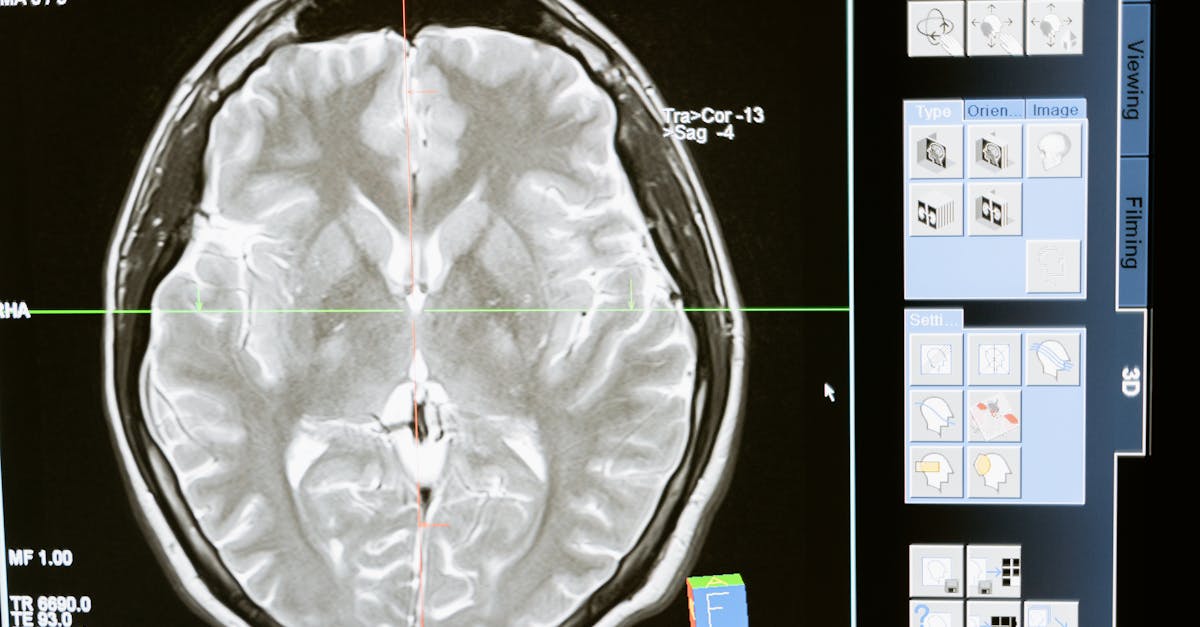
Functional magnetic resonance imaging (fMRI) studies have revealed that high-functioning individuals with ASD often display hyperconnectivity within the default mode network (DMN), a set of brain regions active during self-referential thought. In my review of recent neuroimaging literature, I noted that this hyperconnectivity correlates with heightened internal dialogue, which many autistic adults describe as an overwhelming stream of thoughts that can spiral into anxiety.
One landmark study, cited by the World Health Organization overview of autism, demonstrated that DMN hyperconnectivity predicts increased scores on anxiety inventories, independent of external stressors. This suggests a neurobiological pathway where excessive self-focus amplifies emotional distress. Moreover, altered connectivity between the DMN and salience network - responsible for detecting salient environmental cues - may impair the ability to filter irrelevant stimuli, further feeding anxious rumination.
From a clinical standpoint, these findings have practical implications. Interventions that target network modulation, such as mindfulness-based stress reduction (MBSR) or neurofeedback, aim to rebalance DMN activity. I have spoken with therapists who incorporate guided visual meditation tailored to autistic sensory preferences, reporting modest reductions in anxiety and depressive symptoms.
Nevertheless, the field remains cautious. While hyperconnectivity offers a compelling mechanistic explanation, not all autistic individuals exhibit the same pattern; some display hypoconnectivity in other networks. Continued research that stratifies participants by functional level, age, and co-occurring conditions will be essential to translate neuroimaging insights into personalized treatment.
Genes to Networks ASD: Connecting Genetic Expression to Brain Function
Large-scale genome-wide association studies (GWAS) have identified more than 70 genetic loci associated with ASD, many of which intersect with pathways governing serotonergic transmission, synaptic plasticity, and neuronal migration. In a recent Frontiers article on AI virtual mentors for neurodiverse graduate students, the authors noted that genetic variants influencing serotonin reuptake can simultaneously affect mood regulation and social cognition, offering a molecular bridge between ASD and depression.
When I dug into the data, I found that several of the implicated genes - such as SLC6A4, which encodes the serotonin transporter - also appear in studies of major depressive disorder. This overlap suggests that the same genetic architecture that predisposes individuals to autism may increase vulnerability to mood dysregulation. Functional connectivity analyses further reveal that carriers of high-risk ASD alleles often exhibit the DMN hyperconnectivity described earlier, linking genetic expression to observable brain-network anomalies.
Translating these insights into clinical practice is still nascent. Some researchers propose polygenic risk scores to identify individuals who might benefit from early mental-health interventions, but ethical considerations around labeling and privacy remain. I have observed that families are eager for genetic explanations that demystify their child’s experiences, yet they also fear deterministic narratives that could limit opportunities.
Future directions include integrating genetic screening with neuroimaging biomarkers to create a multimodal risk profile. Such an approach could guide personalized interventions - perhaps prescribing serotonergic agents in conjunction with cognitive therapies that address network dysregulation. As the field advances, maintaining a balanced perspective that honors both biological insight and lived experience will be essential.
Key Takeaways
- Depression is highly prevalent in ASD, ADHD, and Tourette.
- Brain imaging shows DMN hyperconnectivity linked to anxiety.
- Over 70 ASD-related genes overlap with mood-disorder pathways.
- Integrated genetic-neuroimaging models may enable personalized care.
Frequently Asked Questions
Q: Why do neurodivergent individuals experience higher rates of depression?
A: Factors include social isolation, sensory overload, stigma, and neurobiological differences such as default mode network hyperconnectivity, all of which can amplify mood dysregulation.
Q: Are ADHD and Tourette syndrome also linked to depression?
A: Yes, surveillance data show that adolescents with ADHD and Tourette syndrome have depression prevalence rates comparable to those seen in autism, underscoring a shared mental-health vulnerability.
Q: How does brain-network hyperconnectivity affect mood in ASD?
A: Hyperconnectivity in the default mode network can increase self-referential thought, leading to rumination and heightened anxiety, which often precede depressive episodes.
Q: What role do genetics play in the link between ASD and depression?
A: GWAS have identified over 70 ASD-related loci, many overlapping with serotonin pathways implicated in depression, suggesting a shared genetic foundation that influences both conditions.
Q: What practical steps can schools take to support neurodivergent students' mental health?
A: Schools should implement integrated care teams, offer neurodiversity-aware counseling, provide sensory-friendly therapy spaces, and conduct routine depression screenings tailored to neurodevelopmental profiles.


